In the world of high-end travel, the definition of luxury has undergone a significant shift. While opulence was once measured by the weight of the drapery and the gold leaf on the furniture, modern luxury is now defined by space, light, and a seamless connection to the natural world. Nowhere is this more evident than in the rise of “Private Sanctuaries”—villas and estates designed with an indoor-outdoor flow that blurs the boundaries of architecture.
The Philosophy of Tropical Open-Plan Design
At the heart of any tropical sanctuary is the concept of open-plan living. Unlike traditional Western architecture, which seeks to insulate and separate the inhabitants from the elements, tropical design embraces the environment. High vaulted ceilings, often featuring traditional “alang-alang” or ironwood craftsmanship, allow for natural ventilation, reducing the need for constant climate control while creating a sense of immense vertical space.
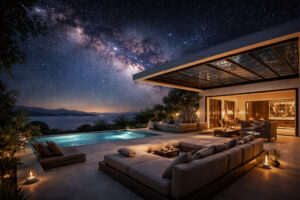
The goal is to create a “living room” that isn’t confined by four walls. When the lounge area opens directly onto a poolside deck or a manicured garden, the entire estate becomes a singular, cohesive environment. This design philosophy encourages a slower pace of life, where the transition from a morning coffee to a midday swim is effortless.
The Role of Natural Materials and Light
To truly achieve the sanctuary aesthetic, the choice of materials is critical. Luxury retreats often utilize a palette of local hardwoods, volcanic stone, and woven bamboo. These textures do more than just look beautiful; they provide a tactile connection to the location. When these materials are hit by the shifting tropical light, they create an interplay of shadow and warmth that a sterile hotel room simply cannot replicate.
Designing for Social Flow
A well-designed private sanctuary isn’t just about aesthetics; it’s about social functionality. The layout must allow for “communal seclusion”—spaces where a large group can gather naturally, such as around a massive reclaimed wood dining table or a sunken poolside lounge, while still offering quiet nooks for individual reflection. The most successful villa designs ensure that no matter where you are on the property, you feel connected to the heart of the home while maintaining a sense of personal privacy.
Water as a Central Design Element
It is impossible to discuss sanctuary design without mentioning the role of water. In these estates, the swimming pool is not merely a recreational feature; it is a visual anchor. Often designed with dark tiles to reflect the sky or “infinity” edges that lead the eye toward the horizon, the pool acts as a cooling agent and a focal point for the entire property’s layout.
Surrounding these water features with lush, tropical landscaping ensures that even in the heart of a bustling district, the guest feels completely insulated in their own private world. It is this specific combination of architectural bravery and natural integration that makes a private sanctuary the ultimate modern escape.